

Electrical Compliance & Commercial EICR Testing
Book an EICR Assessment
Call 01909 319 569
Commercial & Industrial EICR Testing
Nova Electrical delivers commercial and industrial Electrical Installation Condition Reports (EICRs) and emergency lighting testing services for businesses across Sheffield, South Yorkshire and nationwide.
From individual commercial premises through to multi-building manufacturing sites, we help organisations assess the condition of their electrical installations, identify and classify faults, and complete remedial works required to maintain electrical compliance.
Electrical safety testing is one of those obligations that is easy to defer and expensive to ignore. As a duty holder you are required to maintain your electrical installation in a safe condition, and the periodic electrical inspection is how you demonstrate that you have.
Insurers ask for it, landlords ask for it, and if there is an incident the HSE will ask for it. More usefully, a well-executed inspection tells you which parts of your installation are quietly deteriorating so you have time to plan the work in a proactive way.
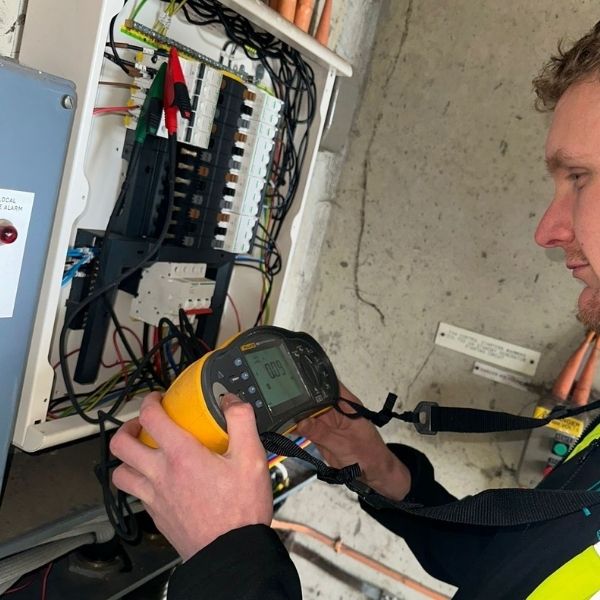
What Is An Electrical Installation Condition Report?
An electrical installation condition report, usually shortened to EICR, is a formal assessment of the condition of a fixed electrical installation. It covers everything from the incoming supply and distribution boards through to the final circuits serving your lighting, sockets, machinery and plant.
The same exercise is often called fixed wire testing, because it examines the fixed wiring rather than the portable appliances plugged into it. The inspection combines visual examination with dead and live testing. Together, these establish whether the installation is safe for continued use, whether it still complies with current wiring regulations, and whether deterioration, damage, overloading or unsafe modification have occurred since it was installed or last inspected.
The report you receive at the end sets out observations against defined classification codes:
C1 – danger present, immediate action required
C2 – potentially dangerous, urgent remedial action required
C3 – improvement recommended, not a failure
FI – further investigation required without delay
An installation with any C1, C2 or FI observation is reported as unsatisfactory. C3 items alone do not fail a report. We explain every coded observation as clearly as possible, with a photograph and a location reference, so you can see what has been found and plan any remedial works in a timely manner.
NICEIC Approved Contractor: Electrical work delivered in accordance with recognised industry standards and best practice.
Constructionline Gold Member: Supporting commercial clients and contractors with established pre-qualification standards.
Commercial & Industrial Experience: Electrical solutions designed specifically for demanding business and operational environments.
Nationwide Capability: Sheffield-based engineers supporting regional and multi-site projects throughout the UK.
What Is Emergency Light Testing?
Emergency light testing checks that your emergency lighting will actually work if the mains supply fails. Every emergency fitting carries its own battery, and batteries degrade over time. A unit that looks perfectly healthy on the wall may give you three minutes of light instead of three hours, and you will not know until the moment it matters.
Testing is carried out on a defined cycle. A monthly function test simulates a supply failure briefly, confirming that every fitting illuminates and that no fitting or battery has failed. An annual full duration test discharges the batteries over three hours, to prove each fitting maintains adequate light for the full duration and then recharges correctly afterwards. Both tests are recorded, and emergency lighting maintenance records are as much a part of your compliance position as the test itself.
Emergency lighting testing is a separate exercise from an EICR, and the two are often confused. A condition report assesses the fixed wiring; emergency lighting testing assesses whether the escape lighting performs to its designed duration. You need both and having them carried out together makes practical sense because the same visit can cover the fixed installation, the emergency lighting and the associated records.
Our emergency lighting services include:
- Monthly function testing and annual full duration testing
- Testing of maintained, non-maintained and self-test systems
- Repair or replacement of failed fittings
- Emergency lighting logbooks and digital test records
- Design and installation of new or extended systems
- Remedial work where coverage or duration falls short
We carry out all testing in line with BS 5266-1 and document it so your logbook stands up to inspection. Where duration testing shows a system has fallen below its rated performance, we quote the remedial work at the same time rather than leaving you to chase it separately.
Commercial EICR & Emergency Light Testing
Our commercial electrical testing service focuses on thorough testing with minimal disruption to your business. Most commercial premises can be tested in phases, board by board or floor by floor, with only short isolations at each stage.
Our commercial EICR services include:
- Full or sampled periodic inspection and testing of fixed installations
- Sub-main, distribution board, and final circuit testing
- Emergency lighting compliance
- Landlord and tenant compliance reporting for let premises
- Insurance and pre-acquisition condition surveys
- Remedial works
- Certification and documentation
Typical commercial premises we test include offices, retail units, warehouses, education buildings, healthcare facilities, hospitality venues, industrial estates and multi-tenant developments.
Where you manage a commercial property portfolio, we can manage your entire estate to a single programme and reporting format, so your compliance records are consistent rather than a folder of different reports from different contractors.
Hazardous Area Inspection & DSEAR Compliance
Nova Electrical specialises in hazardous area electrical work, and inspection within classified hazardous zones is a separate discipline from standard fixed wire testing. Equipment in explosive atmospheres must be inspected against its protection concept, equipment group and temperature class, at inspection levels appropriate to the installation and its risk.
Our specialist engineers carry out visual, close and detailed inspections of hazardous area equipment in gas, dust and fuel classified areas, alongside conventional testing of the wider site installation.
For clients operating chemical, petrochemical, waste processing, fuel storage, food production and biomass facilities, this means the whole site can be inspected by one contractor.
Inspection records are documented and traceable, supporting your DSEAR risk assessments and demonstrating that the equipment in classified areas remains suitable for use in its current environment.
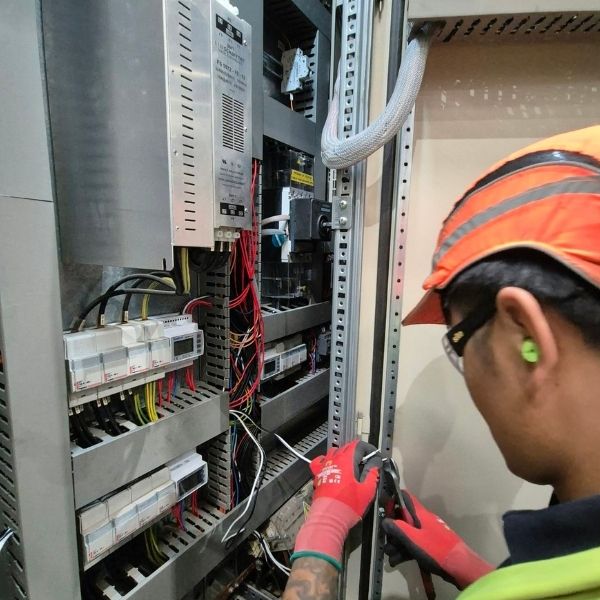
Industrial EICR & Factory Electrical Inspection
Industrial electrical testing is usually a more demanding environment. Isolating any power usually has a major impact on the operation within the building.
We deliver industrial EICR and factory electrical inspection work across manufacturing plants, processing facilities, workshops, foundries, warehousing operations and utilities sites. Our engineers are experienced in live industrial environments and plan the inspection around your operational schedule rather than assuming you can lose a day of output for the convenience of the testing.
Our industrial fixed wire testing approach includes:
- Pre-inspection planning with your engineering and operations teams
- Agreed sampling strategies where full isolation of every circuit is impractical
- Testing scheduled around shutdowns, shift changes, weekends and planned maintenance windows
- Assessment of installations serving harsh, wet, dusty or high-temperature environments
- Clear risk-based prioritisation of remedial work
How Often Should Electrical Testing Be Carried Out?
There is no single answer, because inspection intervals depend on the type of installation, the environment it operates in and how it is used. Recommended maximum periods commonly applied are:
- Commercial premises, offices and shops: every five years
- Industrial premises: every three years
- Educational establishments: every five years
- Agricultural and horticultural premises: every three years
- Places of public entertainment: every three years
- Construction site (temporary) installations: every three months
- Caravan parks and marinas: every year
- Tenanted commercial property: at change of occupancy or every 3-5 years (depending on use)
If you do not know when your installation was last tested, that is a reasonable place to start. The existing report will tell us the scope of the last inspection, what was recommended, and whether the remedial work was ever completed.
Electrical Safety Testing Designed Around Your Operation
Testing an installation means isolating it, and isolation is exactly what most sites cannot afford. Our approach is to establish the least disruptive route to obtaining an accurate assessment before testing begins.
This can include:
- A pre-inspection site visit or detailed discussion to understand the installation and its constraints
- Agreeing the scope, sampling levels and access requirements in advance
- Phased testing across multiple visits where a single shutdown is not possible
- Out-of-hours, weekend and planned shutdown working
- Clear notice periods for every isolation, agreed with your site team
- Safe isolation and permit-to-work procedures throughout
- Immediate notification of any C1 danger found, and rectification (or isolation) agreed before leaving site.
Remedial Works
As a commercial and industrial electrical contractor, we carry out the remedial work ourselves, which removes the awkward gap between a report landing on your desk and someone being available to act on it.
Remedial works are prioritised by risk. C1 items are dealt with immediately, usually at the time they are found. C2 items are quoted and planned promptly. C3 improvements are presented as options with a clear explanation of the benefit.
Typical remedial work following an inspection includes distribution board replacement, sub-main upgrades, RCD protection retrofits, correction of earthing and bonding defects, replacement of damaged accessories and containment, removal of redundant circuits and re-termination of loose or overheating connections.
Your Report & Your Compliance Records
Your EICR report is the evidence you rely on when an insurer, an auditor, a prospective buyer or an enforcing authority asks how you know your installation is safe.
Every inspection we carry out is issued with:
- The completed electrical installation condition report, signed by the inspecting engineer
- A schedule of inspections and a schedule of test results for every circuit tested
- Observations with location references and clear explanations
- A prioritised remedial summary followed up with a quotation to resolve
- A recommended date for the next inspection
We issue reports electronically, usually within five working days of completing the testing, and keep a copy on file so the next inspection starts from a known baseline rather than a blank page.
For clients running estate-wide programmes, we can also provide a consolidated compliance position across all sites, showing what has been tested, what is outstanding and what falls due next.
If you need the report to satisfy a specific requirement, such as an insurance condition, a lease obligation, a funding application or a customer audit, just let us know ahead of the inspection, and we can ensure that your requirements are met.
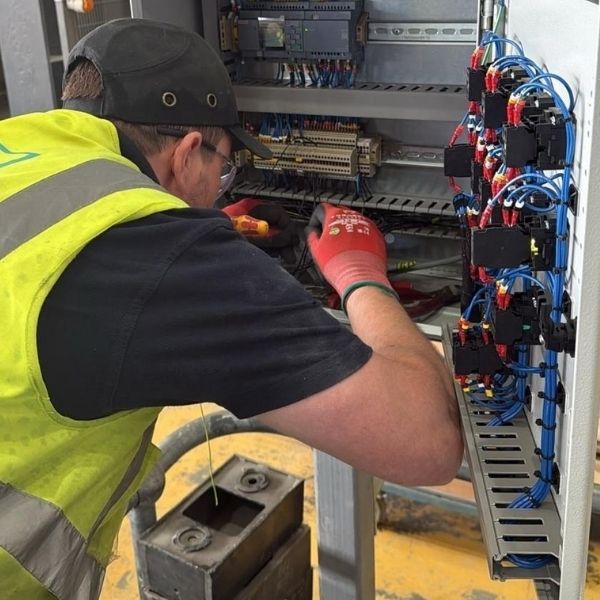
Industries We Support
We provide commercial and industrial electrical testing across a wide range of sectors, including:
Manufacturing and production facilities
Food, drink and ingredients processing
Chemical, petrochemical and process industries
Waste processing and recycling
Warehousing, logistics and distribution
Commercial offices and education
Retail and large-format units
Fuel storage, distribution and depots
Agricultural and biomass facilities
Call Us: 01909 319 569
Get in touch with our expert team today and discover how we can support your electrical needs.
Email Works Better For You?
We’re happy to help however you prefer. Send us an email with your enquiry and our team will get back to you as soon as possible.
Our Electrical Services

Hazardous Areas

We provide compliant electrical installations for hazardous areas, ensuring safe, reliable systems in high-risk commercial and industrial environments.

Lighting

From energy-efficient upgrades to full commercial installations, explore how Nova Electrical delivers reliable lighting systems.

Power

From distribution systems to switchgear installations, discover how we deliver safe, scalable power systems.

M & E Packages

Streamlined mechanical and electrical packages designed to keep your project efficient, compliant, and on schedule.
Why Choose Nova Electrical for EICR Testing?

NICEIC Approved Contractor
Professional commercial and industrial electrical inspection and testing capability.

Testing & Remedial Works
Where faults are identified, Nova Electrical can also provide the electrical work required to rectify them.

Commercial & Industrial Experience
Experienced in working around operational sites and more complex electrical installations.

Clear Reporting
Straightforward documentation designed to help clients understand the condition of their electrical installation and prioritise remedial works.
Hazardous Area Capability
Specialist engineers available for inspection within classified hazardous environments.

Nationwide Capability
Supporting individual premises and multi-site organisations throughout Sheffield, South Yorkshire and across the UK.
What Our Customers Say

Sheffield Based
Sheffield, South Yorkshire & Nationwide Commercial EICR Testing
Nova Electrical is based in Sheffield and provides commercial and industrial electrical testing throughout:
Sheffield
Rotherham
Doncaster
Barnsley
Chesterfield
We also undertake nationwide electrical inspection and testing programmes for organisations operating multiple sites. For estate-wide compliance programmes, using one contractor, one defined scope and one reporting format can make electrical compliance considerably easier to monitor and manage.
Frequently Asked Questions
What does an EICR test?
An EICR assesses the condition of a fixed electrical installation, including distribution equipment, wiring and final circuits.
It combines visual inspection with electrical testing to identify deterioration, damage and potential safety issues.
Is fixed wire testing the same as an EICR?
Fixed wire testing is commonly used to describe the inspection and testing process involved in assessing the fixed electrical installation as part of an EICR.
What causes an EICR to be unsatisfactory?
An EICR is reported as unsatisfactory where C1, C2 or FI observations are recorded. C3 observations alone do not make the report unsatisfactory.
Can EICR testing be completed while our site remains operational?
In many commercial and industrial environments, testing can be phased and coordinated around shutdowns, shifts or planned maintenance periods to reduce disruption.
Can Nova Electrical complete remedial works after an EICR?
Yes. Nova Electrical can carry out remedial works identified during inspection, including distribution upgrades, RCD protection, earthing and bonding corrections and other electrical repairs.
Do you provide EICR testing outside Sheffield?
Yes. Nova Electrical provides testing throughout Sheffield and the surrounding areas and also undertakes nationwide inspection programmes for multi-site clients.
Is Your EICR Due?
If your Electrical Installation Condition Report is due, overdue or you are unsure when the installation was last inspected, speak to Nova Electrical.
We can establish the scope of the inspection, explain how the testing can be coordinated around your site and provide a clear quotation before work begins.


